Non-domestic energy costs
Non-domestic customers include businesses of all sizes, from charities and high street shops to public sector buildings, schools, hospitals and large manufacturing sites.
Energy sits at the heart of Britain’s economic activity, which businesses navigate while managing some of the highest energy prices in Europe. Cutting these costs could help British businesses prosper, supporting jobs and the economy – which is why Energy UK is working with others to deliver these savings.
This hub outlines Energy UK’s advocacy work in cutting non-domestic energy costs.

Our partnership with CBI
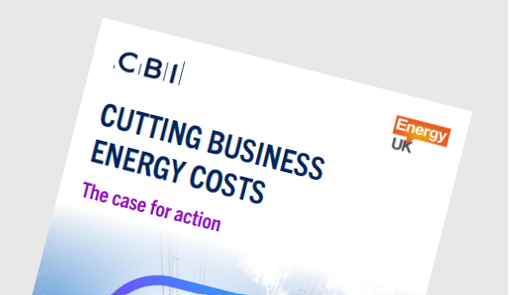
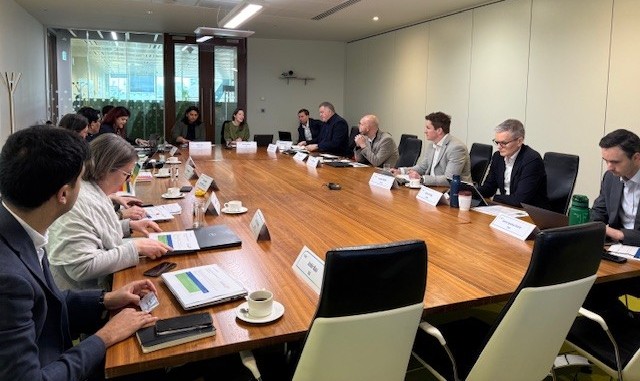
The UK’s leading business and energy trade bodies have joined forces on a programme of policy and economic analysis to examine how rising energy costs are influencing future investment decisions in the UK, assess funding models for essential energy infrastructure, and explore how government can reshape energy policy to better support both key industrial sectors and the everyday economy.
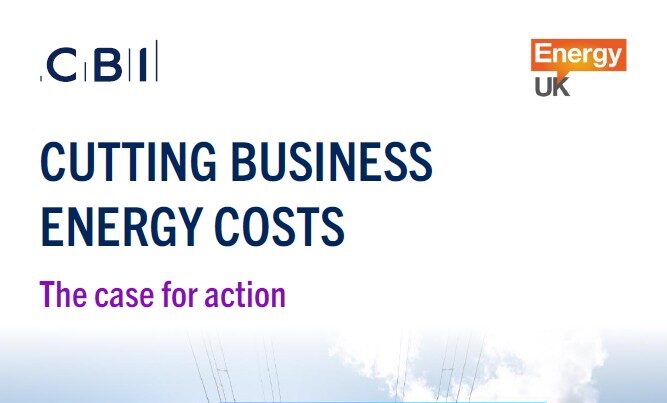
Cutting Business Energy Costs
Energy UK’s first joint report with the CBI (Confederation of British Industry) warns that persistently high business energy costs are threatening the UK’s global competitiveness, dampening investment plans and putting the brakes on the country’s growth ambitions.
It calls on the Government to deliver a robust national strategy to cut business energy costs – moving beyond short-term crisis responses and setting a clear path to a more affordable and sustainable energy future for businesses across the country.
Cutting Business Energy Costs Taskforce
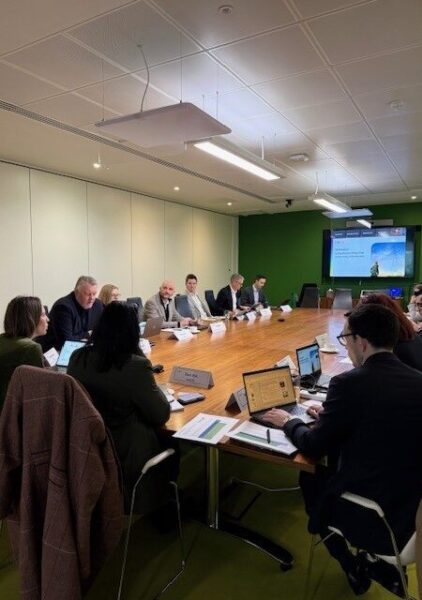
Chaired by Energy UK and CBI, the Cutting Business Energy Costs Taskforce brings together a wide range of cross-economy experts to provide independent advice to the Government on reducing bills for UK businesses.
It focuses on assessing the main drivers and impacts of higher energy costs on different sectors; proposing measures that can deliver quick wins for businesses; and developing long-term strategies to ensure UK business energy prices are predictable, resilient to shocks, and competitive internationally to 2030 and beyond.
- JLR
- KPMG
- PwC
- SSE
- Tim Leunig (Public First, Nesta, London School of Economics)
- Tesco
Support for businesses
Most non-domestic policy costs are placed on electricity bills, adding £5.7 billion to the costs faced by businesses across the country. This contributes to the UK having some of the highest industrial electricity costs in Europe, with 2024 prices nearly two-thirds above the median of International Energy Agency member countries.
The Government offers some support to businesses based on their industry and electricity consumption.
British Industrial Competitiveness Scheme (BICS), first announced in 2025’s Modern Industrial Strategy, is expected to exempt eligible manufacturers and certain supply chain businesses from the indirect costs of the Renewables Obligation (RO), Feed-in Tariffs (FiT) and Capacity Market schemes.
The Government has stated that the scheme is intended to run until 2035, with a review in 2030.
In April 2026, the Government expanded the scheme’s eligibility from about 7,000 businesses to over 10,000 by lowering the electricity intensity threshold for support. From April 2027, eligible businesses are expected to see electricity bills reduced by up to 25%.
While the lower intensity threshold for advanced manufacturing is welcomed, Energy UK believes BICS is a sticking plaster. Even with expansion, it will only benefit a small share of UK businesses.
There is a need for a longer-term plan to reduce electricity costs across the board, including rebalancing some policy costs away from electricity. Ongoing uncertainty around the funding of BICS and future levies is already being priced into contracts, which is affecting smaller businesses on fixed deals.
The Supercharger was introduced in April 2024 and exempts eligible Energy Intensive Industries (EIIs) from some policy costs including the Renewables Obligation (RO), Feed-in Tariffs, Contracts for Difference (CfDs) and Capacity Market (CM) costs. It also provides compensation for electricity network charges through the Network Charging Compensation Scheme (NCCS). The compensation level for the NCCS is due to increase to a 90% compensation level from April 2026.
To receive this support, businesses must:
- Be in electricity intensive sectors that are exposed to the pressures of international trade and are, therefore, less able to pass on costs to their customers.
- Have electricity costs that account for at least 20% of their Gross Value Added (GVA) – in other words, their electricity bill must be large relative to the value the business adds through its operations.
These measures support a limited group of electricity intensive businesses in eligible sectors and, therefore, do not address high electricity prices across the wider economy. Many smaller firms and less energy intensive businesses remain exposed to volatile and high energy bills, creating barriers to competitiveness and limiting business investment.
Energy UK is calling for a robust national strategy that will cut energy bills for all businesses across the country.
Policy solutions
Energy UK has modelled several scenarios to reduce the difference in non-domestic electricity and gas prices.
Our paper, Reducing non-domestic electricity prices to drive economic growth, explores the impacts of electricity to gas price, how non-domestic policy costs rebalancing can be achieved, how this can be funded and public sector decarbonisation.”
Business decarbonisation
Decarbonising our economy is a huge task but delivered strategically, it offers businesses the opportunity to future-proof operations, save on energy costs, and play a crucial role in lowering emissions.
Smaller enterprises face unique energy cost pressures and opportunities. Our report, Small business, big impact, focusses on the support needed to help small and medium-sized businesses (SMEs) improve energy efficiency and adopt low‑carbon technologies.
The report highlights barriers such as access to finance, smart energy management and regulatory certainty and sets our seven clear recommendations to make it easier for SMEs to decarbonise.
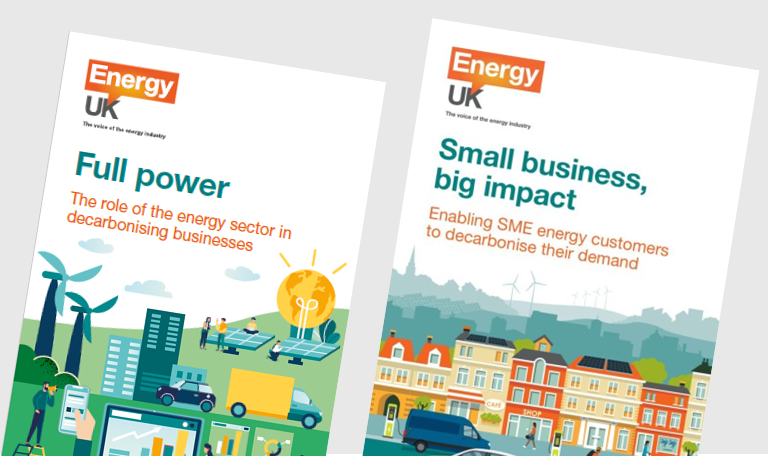
From small hair salons to large manufacturers, UK businesses have access to new solutions to lower energy bills, reduce carbon emissions, and gain a competitive edge. Whether through on-site renewable energy generation, improved building insulation, or transitioning from gas boilers to efficient heat pumps, Energy UK members are innovating to support businesses.
Energy in Action: Innovations in business decarbonisation
From small hair salons to large manufacturers, UK businesses are now equipped with new solutions to lower energy bills, reduce carbon emissions, and gain a competitive edge.
Whether through on-site renewable energy generation, improved building insulation, or transitioning from gas boilers to efficient heat pumps, these opportunities are essential to the UK’s energy transition.

If you’re a business customer head over to our Information for Businesses page, for guidance on improving energy efficiency, onsite generation and available government schemes.
Have questions around how the current conflict could affect bills? Read our explainer:
For further information on managing business energy costs in an uncertain market, visit Ofgem’s website.