June 2026
Successive energy crises have demonstrated the need to improve energy security and deliver long-term solutions to permanently lower household energy bills.
Energy UK proposes two low-income schemes that can be delivered under the Warm Homes Plan: the Local Delivery Fund and the Energy Upgrade Grant. Delivered together, they can reduce household dependence on gas to bring down bills and protect against future price shocks.
Executive summary
Successive energy crises have demonstrated the need to improve energy security and deliver long-term solutions to permanently lower household energy bills. From the expansion of renewables to increasing uptake of low-carbon technologies, reducing our dependence on gas is the best way to protect households from price shocks. Households can save up to 64% on their energy bills through installing packages of measures such as a battery, a heat pump and rooftop solar, and using energy flexibly with a time-of-use tariff.[1]
For more than a decade, the Energy Company Obligation (ECO) was the primary mechanism that ensured low-income households could access the benefits of cost-cutting technologies. ECO provided much needed certainty to the supply chain and installer base, but it also faced significant delivery challenges due to the complexity of the scheme. It has now been discontinued, and the Government has committed to successor programmes for low-income households backed by £5 billion of funding from the Warm Homes Plan.[2]
This scale of funding commitment has the capacity to be transformational for thousands of households in permanently reducing energy costs. But this rests on the Government’s ability to quickly plug the delivery gap left by ECO. Last year alone, ECO was responsible for 26% of heat pump installations, and unless rapid progress is made on a successor scheme, there is a risk of up to 70,000 job losses from the retrofit sector.[3],[4] This would undermine the Government’s efforts to create 180,000 good quality jobs through the Warm Homes Plan and risk a hiatus in the delivery of cost-cutting technologies for the low-income households that need them most.
There is an urgent need to rethink the Government approach to supporting low-income households, learning lessons from the ECO scheme, and recognising the fundamental limitations of current programmes. Schemes such as the Warm Homes: Local Grant – which is likely to spend only 18% of an allocated £500 million budget during its three-year lifetime if the delivery rate does not significantly accelerate – demonstrate that a step change in approach is needed.[5]
This paper proposes the development of two schemes for low-income households; the area-based Local Delivery Fund and the Energy Upgrade Grant. If just £1.5 billion of the Warm Homes Plan funding were invested into the Energy Upgrade Grant, it would serve 252,000 households with an average of £620 annual savings, representing 37% of a typical bill.[6] This would lead to aggregate annual savings of £157 million and £2.9 billion lifetime bill savings, representing more than two times more value for money than its predecessor ECO4.[7], [8]
- Warm Homes: Local Delivery Fund: A smaller scheme that either replaces or evolves from the Warm Homes: Social Housing Fund and Warm Homes: Local Grant that delivers on the aspiration for area-based delivery.
- Warm Homes: Energy Upgrade Grant: A new, larger scheme launching in October 2026 that builds on the model of the Boiler Upgrade Scheme to offer fully funded solar, batteries and clean heating systems to individual households.
252,000
households helped
£2.9 billion
lifetime bill savings
£620
average annual
bill saving per household
Energy UK’s proposals would enable the Government to develop a long-term approach to area-based delivery built on trust, while also rapidly implementing a grant-based scheme that could be ready in time for this winter. This will require a new approach underpinned by robust consumer protections and the regulatory simplicity that ECO lacked. These schemes have the capacity to permanently lower energy bills for thousands of low-income homes while providing the certainty that the supply chain and installer base need to ensure households of all incomes can benefit from cost-cutting technologies.
Low-income schemes are a critical part of the Warm Homes Plan
In January 2026, the Government published the Warm Homes Plan alongside £15 billion of funding to support the rollout of clean heat. £5 billion of this has been allocated to support low-income households, making this support a key part of the Plan. The Warm Homes Plan sets out the Government’s ambition to create an area-based scheme from 2027 to deliver low-carbon measures to these households.[9] Area-based schemes can drive economies of scale, tailor delivery to local need and nurture trust through community collaboration. However, the complexity of these initiatives means that they will take a long time to establish and scale up.
The conflict in the Middle East demands an urgent response to support low-income households in a manner that will not only cut their energy bills this winter but also permanently reduce them. This necessitates rapidly ramping up the installation of low-carbon technologies in low-income households. This challenge is best met through a simple, flexible scheme focused on installations in individual homes, negating the need for extensive, complex area-based planning.
Launching the Energy Upgrade Grant in October 2026 can help mitigate the impact of the conflict in the Middle East in the immediate term, while allowing time for the area-based Local Delivery Fund to ramp up.
Considering the above, the two schemes will aim to meet the following objectives:
- Protect vulnerable households from rising energy bills at pace.
- Increase energy security to protect against further price shocks.
- Deliver long-term bill savings for low-income households.
- Decarbonise heating.
- Prevent job losses in the supply chain to support delivery.
How the schemes will be funded
Energy UK proposes that £1.5 billion of the capital funding available for low-income households is directed towards a new Warm Homes: Energy Upgrade Grant, running from October 2026 to December 2029. This scheme would enable the rapid deployment of low-carbon technologies, including clean heat, which can permanently lower energy bills for low-income customers.
The recommended allocation would leave more than £1 billion available for the Warm Homes: Local Delivery Fund, maintaining similar total annual funding to existing schemes and representing a significant commitment to begin scaling up area-based delivery. £600 million of Financial Transactions funding has also been allocated for low-income households. This funding mechanism is challenging to allocate but should be used to support the objectives of these two schemes.
Warm Homes: Local Delivery Fund
The Local Delivery Fund should build on the Warm Homes: Local Grant and Warm Homes: Social Housing Fund to deliver these benefits. Local authorities should deliver the Fund and decide how it is allocated to ensure that projects can align with the needs of the local community. Houses of all tenures should be eligible to benefit from the fund to unlock street-by-street delivery, creating opportunities for efficiencies in planning, grid connections and supply chain delivery. To further support the flexibility needed to enable street-by-street delivery, local authorities should be able to outline eligibility criteria and targeting methods in their application.
Local authorities should be required to outline how they plan to engage and align delivery with Local Area Energy Plans, heat network zoning and the electricity distribution price control framework in their application to the scheme. To support this alignment, participating authorities should work with heat network projects in advance of scheme launch to provide any additional time needed for delivery.
Local Delivery Fund: benefits
The scheme has the potential to drive economies of scale, tailor delivery to local need, and nurture trust through community collaboration. It can also unlock opportunities for blended funding and strategic alignment with wider policy initiatives.
- Area-based delivery supports the creation of economies of scale, creating opportunities for able-to-pay households to participate, and reducing costs.
- A mixed-tenure approach can unlock opportunities for alignment with local need and street-by-street delivery. This would also simplify retrofit in multi-occupancy buildings through facilitating the installation of communal heating technologies, such as shared-ground loops and rooftop solar.
- Local authorities can leverage relationships with charities and community groups to boost scheme engagement, while improving trust in schemes by using local-government-branded communications.
- Blending funding with additional schemes can unlock street-by-street delivery by creating further opportunities for measure delivery. A single initial house assessment taken with the prospect of leveraging blended funding in mind can reduce disruption for households.
- Strategic alignment of delivery with wider policy can mitigate potential connection challenges while helping to deliver Local Area Energy Plans and the expansion of heat networks.
Local Delivery Fund: challenges
It would take a long time for the area-based scheme to achieve scale because of the need to develop detailed partnership frameworks between local authorities and delivery partners under a new scheme, as well as design and agree implementation plans. Both these elements would likely need to adopt a test-and-learn approach, with adjustments made until an effective and efficient model is found.
Energy UK held two workshops on the future of the Energy Company Obligation (ECO) in 2025, convening local authorities, energy suppliers and other key stakeholders, such as managing agents, installers and Distribution Network Operators. Area-based delivery was a key theme of the workshops and participants agreed that the partnership working required for area-based schemes takes years to establish successfully.
Given the leading role that local authorities will play in the area-based scheme, scaling up delivery over the coming years will also be constrained by continued consolidation of local government and, in many areas, limited resources and capabilities.
The restricted capacity of local authorities is demonstrated by the current progress on the Warm Homes: Local Grant. Energy UK analysis reveals that if the delivery rate achieved so far continued, it would result in just 18% of the £500 million allocated to the scheme being utilised during its three-year lifetime.[10] Even accounting for the time taken to ramp up installations and delays in reporting and publishing scheme data, delivery is dramatically behind where it should be one year into the scheme. The Government has said that where potential underspend has been identified, it has been reallocated to higher performing local authorities under the scheme to ensure that funding could be utilised by the end of the financial year.[11] Yet just £2.5 million was reallocated in the first year of delivery, out of an estimated £123 million underspend.[12]
Local authorities face additional capacity constraints from other policies announced in the Warm Homes Plan, such as the enforcement of the Minimum Energy Efficiency Standards (MEES) in the private rented sector and adopting the role of Zone Coordination Body to implement heat network zoning. Local government reorganisation from 2028 could introduce further constraints, as the changes will require some local authorities to undergo extensive operational changes.
Significantly raising the level of funds expected to be deployed by local authorities in the near-term would create the considerable risk of the Government falling far short of its targets. A dual-scheme approach is required to ultimately experience the benefits of area-based delivery, while deploying funds at the pace needed to support low-income households now.
Warm Homes: Energy Upgrade Grant
The Energy Upgrade Grant should build on the model of the Boiler Upgrade Scheme (BUS) by offering vouchers for eligible technologies. Organisations such as energy suppliers, local authorities and managing agents would identify low-income households that can benefit from these vouchers. Voucher applications would need to prove recipients’ eligibility, with the risk sitting with the organiser if the voucher application is rejected.
Unlike the BUS, vouchers should cover the full cost of installing the measures. Approved organisations should not have an obligation to deliver a specific number of measures. They should instead be approved to apply for vouchers only when measures are delivered. The installation of low-carbon technology packages, such as solar, batteries and clean heating systems should then be arranged, with the costs being claimed back through the scheme.
The scheme should include an approved list of technologies that are eligible for the grant. There should be a cap on the size of grant available for each technology and overall grant per household. This approach would encourage delivery organisations to be cost effective, providing better value for money for the taxpayer.
From the technology list, organisations delivering the scheme should have flexibility in the type and number of technologies installed in any given home, so long as the cost of the measures falls below the household spending cap. This would support the rapid deployment of low-carbon technologies that is required to support low-income households, drive market growth, and deliver jobs and skills in the supply chain.
Energy Upgrade Grant: benefits
The Energy Upgrade Grant can deliver immediate, long-term bill savings for low-income households while supporting the energy efficiency supply chain by delivering at pace. The scheme would also unlock co-benefits by drawing on the delivery and commercial expertise of participating organisations.
- Drawing on the delivery experience and data access of well-positioned organisations such as energy suppliers can encourage delivery efficiencies as well as the integration of aftercare, including tariff and smart meter advice, to maximise the bill savings. Helping households to familiarise themselves with new technologies post-installation is a key part of the electrification journey and will be essential to ensure that they are used effectively.
- Organisations, or partnerships of organisations, could target a specific area in line with local strategy, such as Local Area Energy Plans, or deliver at a national scale. This has the potential to unlock some of the benefits of area-based delivery at pace as it does not impose formalised frameworks upon involved parties.
- Rolling out the Energy Upgrade Grant in October 2026 will provide organisations that are well placed to deliver at pace the opportunity to help protect households against energy bill increases amid the conflict in the Middle East.
- Given that ECO4 funded more than 100,000 low-carbon technology installations, the supply chain is ready to pivot to a scheme focused on low-carbon technologies.[13] However, it is at a critical juncture due to almost 70,000 job losses being expected following the closure of ECO; immediate clarity over a future scheme is needed.[14] The Energy Upgrade grant can support the supply chain by delivering measures at pace.
- Ensuring a range of organisations are involved in the scheme will reduce the risk of households missing out on upgrades arising from a postcode lottery based on issues such as the capacity of their local authority, or presence of local installers. These households would still be able to benefit from delivery orchestrated by national organisations, such as charities and energy suppliers.
- To maximise co-benefits, organisations can form partnerships to apply for vouchers. This would draw on the unique strengths of each organisation type, support innovative targeting, for example using energy debt data, and open the door to locally led solutions tailored to need and wider local energy system plans.
- To minimise the risk of quality issues, the Energy Upgrade Grant should require robust inspection, monitoring, audit and enforcement activity across the entire quality assurance landscape. This would ensure that households are protected while boosting confidence in the scheme.
Bringing down bills through the Energy Upgrade Grant
Eligible measures can deliver greater bill savings for households when installed together. Assuming that each household received two measures on average, the Warm Homes: Energy Upgrade Grant could drive the installation of low-carbon technologies and energy efficiency measures in around 250,000 households. This would lead to aggregate annual savings of £157 million and £2.9 billion lifetime bill savings, representing more than two times more value for money than its predecessor ECO4. [15],[16],[17] This translates to an average annual saving per household of £620, roughly 37% of a typical bill, and almost five times larger than the Warm Home Discount.
If rapidly implemented, the Warm Homes: Energy Upgrade Grant can help protect low-income households from the upcoming increase in energy bills driven by the conflict in the Middle East. In winter 2026/27 alone, the Grant would deliver £20 million in annual savings to 34,000 households.[18]
Unlocking co-benefits through participating organisations
It is expected that larger, customer-facing organisations, such as energy suppliers and retrofit managing agents, would be more likely to participate in the scheme due to the targeting provision.
The commercial expertise of these organisations can create delivery efficiencies and utilise existing supply chain relationships to maximise the impact and pace of scheme deployment.
Organisations are eligible to participate within the scheme must pass an approval process to ascertain their financial resilience, competency to deliver measures and ability to target households. The process should also consider how applicants can provide opportunities for households to experience co-benefits, such as tariff advice and aftercare.
An energy supplier, for instance, is well positioned to offer tariff advice, which can help households maximise energy bill savings through effective use of new technologies. A combination of a heat pump, solar and a battery, for example, can save households £810 more per year when operated flexibly on a time-of-use tariff compared to a scenario where the same assets are not operating flexibly on a single-rate tariff.[19]
Drawing on the delivery experience, data access and commercial expertise of organisations can encourage delivery efficiencies and support the deployment of trusted installers to co-design retrofit plans with households.
Figure 1: Example services provided by an energy supplier organising an installation within the Energy Upgrade Grant.
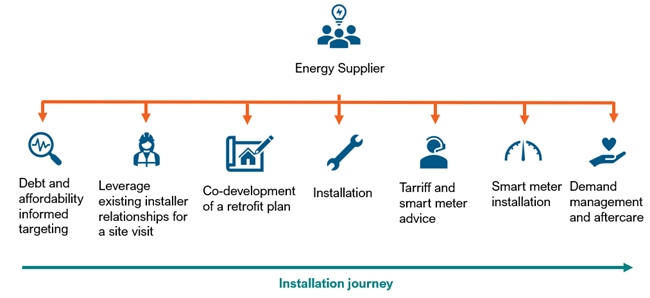
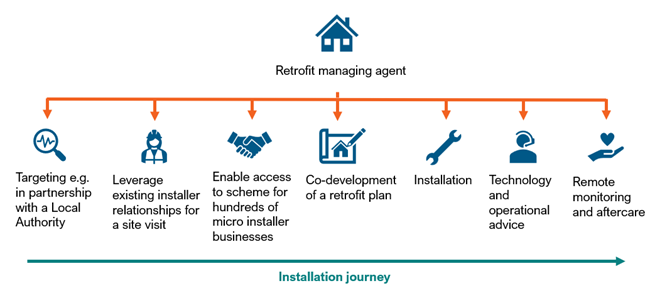
Figure 2: Example services provided by a retrofit managing agent organising an installation within the Energy Upgrade Grant.
Eligibility and targeting
Delivery organisations should be given some flexibility to use their own data to determine eligibility. It is expected that larger, customer-facing organisations, such as energy suppliers and managing agents, would be more likely to participate in the scheme due to this provision.
Organisational applications should include details of the eligibility criteria they plan to use and their verification process. The Department for Energy Security and Net Zero (DESNZ) could set parameters for certain eligibility criteria, such as receipt of means-tested benefits, in line with the Warm Home Discount, and annual household income of £36,000 or less, in line with the Warm Homes: Local Grant. As data-sharing efforts progress to improve targeted support schemes, DESNZ should also look to integrate targeted support data into the Energy Upgrade Grant.
Importantly, eligibility for the Energy Upgrade Grant should not be based solely upon household income. Without access to HMRC data, proving household income can be a long and complicated process and may not be suitable for all organisations looking to take part in the scheme. Instead, organisations should detail what constitutes as a low-income or vulnerable household under their preferred targeting method and eligibility criteria when applying for the scheme. This does not preclude income being qualifying criteria for scheme participation, as this should be at the discretion of the organisation.
As there are significant rates of fuel poverty across all tenures, all tenures should be eligible for the Energy Upgrade Grant. To ensure scheme accessibility, there should be no tenure-specific quotas.
Figure 3: Fuel poverty rates by tenure[20]
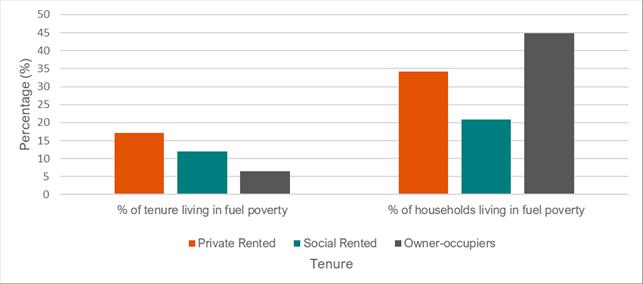
This flexible approach to eligibility would allow organisations to draw on their own data to support the identification of households that would benefit most under the scheme. For example, an energy supplier would be able to use debt data as a targeting proxy without the added complexity of needing to meet tenure quotas. This system will grant the freedom necessary for data-led targeting to work effectively, while increasing access to support for those who need it and who are at risk of slipping through the cracks of traditional eligibility criteria.
The Energy Security and Net Zero Committee’s inquiry into retrofitting homes for Net Zero found that the complexity of schemes had led to high administrative costs, effectively reducing the number of deliverable measures.[21] Allowing organisations to utilise their own data for targeting simplifies this process and can help to keep targeting costs down. However, it is important that targeting costs are reflected in the value of vouchers. This would encourage organisations to be efficient and further reduce the administrative costs of the scheme.
Ensuring scheme accessibility
The Energy Upgrade Grant should be technology neutral. This enables the tailoring of measures to household need, mitigating the need to turn customers away in cases of practical unsuitability for a specific solution.
In previous schemes, stringent energy efficiency targets have required a whole-house approach to the retrofitting of measures, which can unfairly exclude households where their home is too expensive or technically challenging to upgrade to an Energy Performance Certificate (EPC) C. Also, 73% of homeowners do not know their EPC rating so any requirements risk creating a barrier to entry for low-income households.[22] The Energy Upgrade Grant should not place restrictions on eligibility based on EPC ratings.
While multiple measure installations in one property are desirable due to the added bill savings this will deliver, the Energy Upgrade Grant should not prevent the installation of single measures. This reflects the diversity of the UK housing stock, ensuring that eligible households do not miss out on upgrades and bill savings due to factors out of their control, such as space restrictions in the property, a looped electricity supply, or prohibitive planning permission requirements.
While social and private rented tenants would be eligible, their landlord should only be able to access 50% of the grant value. They should then be required to fund the remaining costs privately.
However, this should be reviewed upon the universal enforcement of Minimum Energy Efficiency Standards (MEES) for the PRS and SRS in 2030. These will require private landlords to meet EPC C in two metrics, and social landlords to meet EPC C in one. There is a risk that the Energy Upgrade Grants could reduce the amount of private capital being invested into energy efficiency measures. Potential solutions to this include providing 50% of funding for measures up to the £10,0000 spending cap, or allowing landlords to access the grant if they have reached the spending cap and have not achieved MEES compliance.
A simple and transparent application process
Complex and lengthy application processes have been a criticism of previous schemes, such as the Green Homes Grant and the Home Upgrade Grant.[23], [24] Attention should be given to ensure the application process provides the path of least resistance for prospective households.
This can be achieved by streamlining the process to require limited information, such as proof of address, before a site visit takes place to assess which measures would be best suited to the needs of the household. When this information is requested, it is important that the household is given transparent information about the Grant and, if applicable, what information is needed from them to prove eligibility under the participating organisation’s criteria. There must also be visibility of the organisation funding the measure with clear contact details provided. In addition to being targeted, households should be able to self-refer to the scheme via the Government website and subsequently be matched with a participating delivery organisation.
Following the site visit, it is crucial that the household (and landlord, if applicable) receives clear communications of the options available to them, that they understand how measures will affect the property and its energy bills, and that they are adequately supported throughout the decision-making process. From the feasible options, the delivery organisation should co-design a solution with the household that is best suited to their needs. Following this process, the delivery organisation should then be expected to complete and submit the application for the voucher to DESNZ.
Ensuring robust consumer protections
To minimise the risk of quality issues, the Energy Upgrade Grant must require robust inspection, monitoring, audit and enforcement activity across the entire quality assurance landscape. This is also critical for consumer confidence in the scheme given that a study by Citizens Advice found that 31% of homeowners are concerned that installing energy efficiency measures would lead to problems such as damp and mould.[25]
Under the Energy Upgrade Grant, all measures should be carried out by MCS certified installers, or relevant qualifications in cases of heat network connections, for example, to align with specified certification requirements under previous schemes.[26] There should be a view to increase scheme oversight and customer support through the Warm Homes Agency when it is established. Following MCS reforms, this will ensure that households are supported throughout their retrofit journey and have access to a simple and clear route to resolving issues should they arise.
Fraud prevention must be a priority of the Energy Upgrade Grant. The responsibility for fraud prevention must be clearly set within the scheme. From the application process to the final installation, every stage of the installation journey must contain robust counter fraud safeguards. To ensure that all customers and participating organisations are protected equally against fraud, these safeguards should be set against a standardised baseline and set at the beginning of the scheme.
Additionally, steps should be taken to ensure that no aggressive marketing techniques are used to encourage people to sign up to the scheme to ensure that households are not deterred from participation. To prevent confusion during the targeting process, clear information about consumer rights and what households are entitled to under the scheme must be provided in writing as standard upon first contact.
Delivering bill savings through eligible measures
Eligible measures should be selected on the basis that they deliver the most bill and carbon savings for the lowest cost. They should also provide opportunities for multiple property types to benefit from the Grant. The below table sets out which measures should be eligible under the scheme alongside their cost and annual bill savings.
Figure 4: Eligible measures and their cost. Source: Cotality (2025) [27]
| Measure | Saving (with time-of-use tariff) |
| Air source heat pump | £260 |
| Rooftop solar | £330 |
| Batteries | £130 |
| Electric vehicle chargers (EV ownership required) | £680 |
| Cavity wall insulation | £140 |
| Loft insulation | £230 |
| Heat network connection | N/A[28] |
| Heat batteries | N/A |
Each measure should be subject to a funding cap set to reflect the cost of the asset and its installation. The cap per measure should be tiered for various property sizes so that it does not preclude measure installations in larger properties. Applications made by organisations should include clear evidence of costs for each measure type. DESNZ should conduct regular audits to ensure that organisations are not systematically charging the maximum price allowed under the cap.
There should also be an overall funding cap for the household. This should be determined by the cost of installing an air-to-water heat pump or heat network connection, rooftop solar, and a battery in a dwelling of that size to reflect that these measures can deliver the highest energy bill and carbon savings, while helping to protect households from rising energy costs. The cap should also take targeting costs into account.
Both measure and household caps should be reviewed regularly to ensure that they are aligned with the real-world cost of installing low-carbon technologies.[29] It is important that the voucher value is not below the technology cost to ensure that the scheme focuses on quality delivery rather than risking too much emphasis on cost-cutting, while maintaining the attractiveness of the scheme to prospective organisations. DESNZ should additionally hold discussions with heat network developers ahead of the scheme to develop the optimal solution for funding in the context of varied asset ownership.
Case studies
Case Study 1: Early 1900s solid-wall brick terraced house
(2,866,500 properties in this profile) [30]
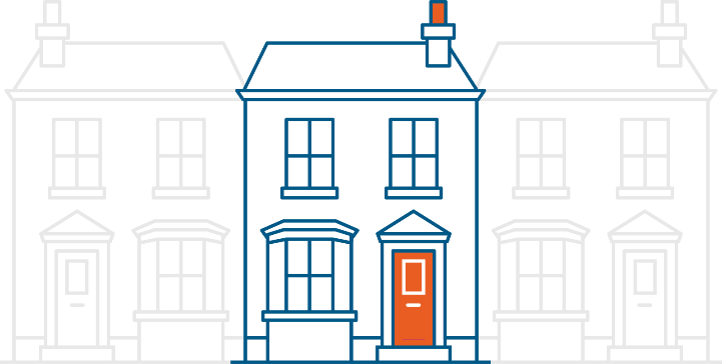
By installing a package of measures and switching to a time-of-use tariff, this household reduced their energy bill from £2,586 to £1,854.
| Installed measures | Measure cost | Cumulative annual savings with flat-rate tariff | Cumulative annual savings with time-of-use tariff |
| Air-source heat pump with radiators | £9,500 | £-17 | £-17 |
| 3kWp PV system | £3,500 | £315 | £315 |
| 10kWh battery | £4,000 | £315 | £732 |
Case Study 2: Semi-detached houses and bungalows built between 1930 and 1983
(4,120,340 properties in this profile)[31]
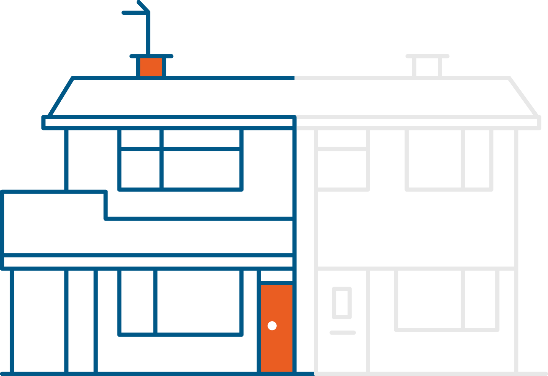
This household had previously received a heat pump and 3kWp solar PV system under ECO. Switching to a time-of-use tariff and installing these additional measures reduced their energy bill from £1,957 to £1,431.
| Installed measures | Measure cost | Cumulative annual savings with flat-rate tariff | Cumulative annual savings with time-of-use tariff |
| 10kWh battery | £4,000 | £0 | £354 |
| Cavity wall insulation | £1,600 | £165 | £486 |
| 300mm loft insulation from 100mm | £2,000 | £215 | £526 |
Case Study 3: Electrically heated flats built between 1983 and 2003
(436,140 properties in this profile)[32]

This household reduced their energy bill from £2,615 to £1,235 by installing a package of measures and switching to a time-of-use tariff.
| Installed measures | Measure cost | Cumulative annual savings with flat rate tariff | Cumulative annual savings with time-of-use tariff |
| Shared ground loop connection | £9,000 | £953 | £953 |
| 1.5 kWp share of PV array | £2,000 | £1,119 | £1,119 |
| 5kWh battery | £2,250 | £1,119 | £1,380 |
Conclusion
Too many energy customers are struggling with high energy bills, and the situation will only get worse as a result of the conflict in the Middle East.[33] Ambitious solutions are needed to help households move off gas and improve the UK’s energy security.
The provision of low-carbon technologies can provide immediate savings for low-income households, while ensuring they remain lower in the long-term. It will also support the broader ambition of the Warm Homes Plan to decarbonise the housing stock.
The Energy Upgrade Grant can help deliver these benefits by supporting delivery at pace, while the more complex Local Delivery Fund is designed and scales up to eventually provide the advantages of area-based delivery.
Establishing a new scheme by October 2026 is challenging. However, building on existing frameworks, such as the Boiler Upgrade Scheme, and leveraging the institutional delivery expertise of various organisations, including energy suppliers and retrofit managing agents, will help ensure the Government’s significant planned investment can start making a real difference to people’s lives from this winter.
[1] Energy UK (2025) Clean Heat: Financing the Transition
[2] Department for Energy Security and Net Zero (2026) The Warm Homes Plan
[3] Department for Energy Security and Net Zero (2026) Heat pump deployment statistics: December 2025, Department for Energy Security and Net Zero (2026) Household Energy Efficiency Statistics, headline release April 2026
[4] The Installation Assurance Authority (2026) January News Update
[5] Department for Energy Security and Net Zero (2026) Warm Homes: Local Grant statistics (April). Percentage underspend is calculated as the spend within WHLG as a percentage of the total funding granted to councils that had submitted data divided by total funding accounted for adjusted for a 12-month period (%).
[6] Assumed distribution of the £1.5 billion is £500 million from October 2026 to December 2027, and £500 million for each of the following two years. Installs of measures are set in order to maximise the number of households served given the cost of measures. Data obtained from Cotality (2025), Nesta (2024), Domestic heat pump flexibility modelling, Money Saving Expert (2026), Is solar battery storage worth it?, Energy Saving Trust (2026), Cavity wall insulation, Energy Saving Trust (2026), Roof and loft insulation, RAC (2026), Electric car charging – how it works and how much it costs.
[7] Lifetime bill savings are calculated using the lifespan of each measure type, number of installs and, savings and costs associated with the counterfactual asset where applicable. Data obtained from Cotality (2025), Nesta (2024), Domestic heat pump flexibility modelling, Money Saving Expert (2026), Is solar battery storage worth it?, Energy Saving Trust (2026), Cavity wall insulation, Energy Saving Trust (2026), Roof and loft insulation, Energy Saving Trust (2026), Battery Storage, Energy Saving Trust (2026), Solar Panels, RAC (2026), Electric car charging – how it works and how much it costs.
[8] Based on the cost of annual bill savings in ECO4. Data obtained from Department for Energy Security and Net Zero (2026).
[9] Department for Energy Security and Net Zero (2026), The Warm Homes Plan
[10] Department for Energy Security and Net Zero (2026), Warm Homes: Local Grant statistics (April). Percentage underspend is calculated as the spend within WHLG as a percentage of the total funding granted to councils that had submitted data divided by total funding accounted for adjusted for a 12-month period (%).
[11] UK Parliament (2026), Question for Department for Energy Security and Net Zero.
[12] UK Parliament (2026), Question for Department for Energy Security and Net Zero. Department for Energy Security and Net Zero (2026), Warm Homes: Local Grant statistics (April). Total estimated underspend is calculated as the cost of delivered measures as a percentage of total funding granted to councils who submitted data adjusted for a 12-month period, divided by the percentage of funding given to councils that had submitted data.
[13] Department for Energy Security and Net Zero (2026), Household Energy Efficiency Statistics, headline release April 2026
[14] The Installation Assurance Authority (2026), January News Update
[15] Assumed distribution of the £1.5 billion is £500 million from October 2026 to December 2027, and £500 million for each of the following two years. Installs of measures are set in order to maximise the number of households served given the cost of measures. Data obtained from Cotality (2025), Nesta (2024), Domestic heat pump flexibility modelling, Money Saving Expert (2026), Is solar battery storage worth it?, Energy Saving Trust (2026), Cavity wall insulation, Energy Saving Trust (2026), Roof and loft insulation, RAC (2026), Electric car charging – how it works and how much it costs.
[16] Lifetime bill savings are calculated using the lifespan of each measure type, number of installs and, savings and costs associated with the counterfactual asset where applicable. Data obtained from Cotality (2025), Nesta (2024), Domestic heat pump flexibility modelling, Money Saving Expert (2026), Is solar battery storage worth it?, Energy Saving Trust (2026), Cavity wall insulation, Energy Saving Trust (2026), Roof and loft insulation, Energy Saving Trust (2026), Battery Storage, Energy Saving Trust (2026), Solar Panels, RAC (2026), Electric car charging – how it works and how much it costs.
[17] Based on the cost of annual bill savings in ECO4. Data obtained from Department for Energy Security and Net Zero (2026).
[18] Winter 26/27 being October 2026 to March 2027. The figures are calculated using the above figures for annual bill savings and households reached under the Warm Homes: Energy Upgrade Grant. We apply a conservative linear uptake throughout the year.
[19] Cornwall Insight (2024), Domestic heat pump flexibility modelling
[20] Department for Energy Security and Net Zero (2026), Fuel poverty detailed tables 2026 (2025 data)
[21] Energy Security and Net Zero Select Committee (2024) Retrofitting homes for net zero
[22] Citizens Advice (2023) Demand: Net Zero
[23] National Audit Office (2021) Green Homes Grant Voucher Scheme
[24] Department for Energy Security and Net Zero (2025) Home Upgrade Grant Phase 1 Evaluation
[25] Citizens Advice (2023) Demand: Net Zero
[26] Ofgem (2026) ECO 4 Guidance: Delivery. Version 4.0, paragraph 5.261.
[27] Savings are calculated for a typical low-income household living in a mid-century semi-detached cavity wall property. Data obtained from Cotality (2025), Money Saving Expert (2026), Is solar battery storage worth it?, Energy Saving Trust (2026), Cavity wall insulation, Energy Saving Trust (2026), Roof and loft insulation, RAC (2026), Electric car charging – how it works and how much it costs. No reliable data for savings offered by heat batteries was available. Figures are rounded to the nearest £5. Savings for an air-source heat pump are for switching to an air-to-water system from an E-rated boiler, though air-to-air systems should be eligible under the scheme.
[28] The cost saving of a heat connection will depend on the location, heat solution and building type. It should be noted that heat networks are a regulated sector and that consumer protections apply.
[29] Climate Change Committee (2025), The Seventh Carbon Budget.
[30] Data obtained from Cotality (2025). A flat-rate tariff is one where the unit price of electricity remains the same over a fixed period. Example tariffs of this type include standard variable and single-rate tariffs. The number of properties within each profile spans all income groups.
[31] Data obtained from Cotality (2025)
[32] Data obtained from Cotality (2025)
Downloads
-
Energy-UK-Clean-Heat-Supporting-low-income-households-Jun-2026
Type: PDF (585 KB)


